
Two Guitars Does Not Make You a Dealer

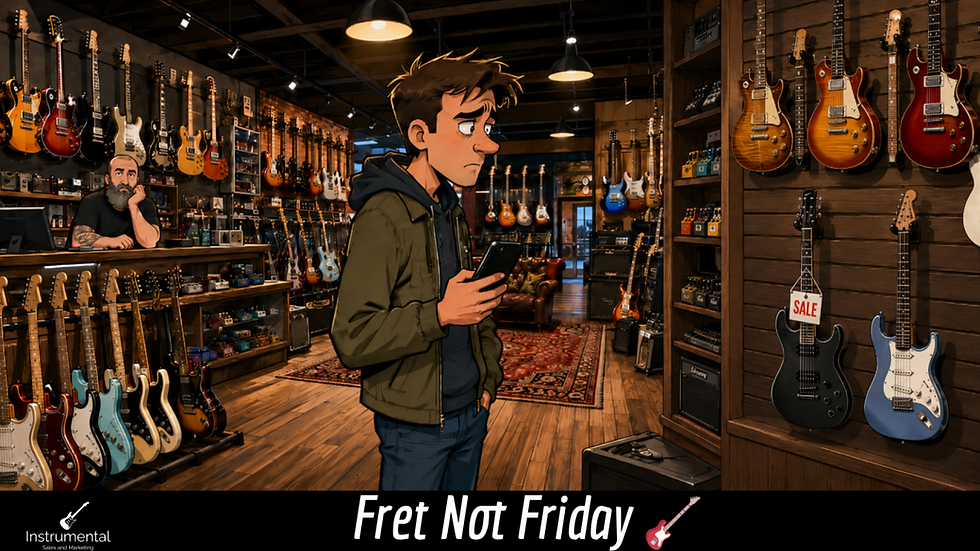
I've watched this exact thing happen more times than I can count. 🎸
A retailer signs up to a new brand. Takes two or three pieces. Sticks them somewhere near the back, sometimes literally behind a rack of something else. No staff training, no social post, no mention in-store beyond the fact they're technically hanging there.
Three months later, those same guitars get a discount sticker slapped on them, and the verdict comes in:
"That brand doesn't sell."
Except it was never really given the chance to.
That is not brand representation. That is tokenism.
A guitarist sees the brand online, likes the look of it, checks the dealer locator, finds a shop, and makes the trip. They walk in expecting a proper range. What they find is two guitars, neither of which is the model they wanted, neither set up particularly well, and a staff member who can tell them less about the brand than they already knew from the website.
They leave without buying anything. Not because the brand was wrong for them. Because nobody gave it a fair chance to be right for them.
This is not about forcing anyone into massive opening orders. Nobody sensible is telling dealers to buy blindly in this market. Costs are high, footfall is unpredictable, cash flow matters, and the wrong stock can sit around for months. That caution is fair.
But there's a difference between being cautious and being non-committal, and the industry keeps treating them as the same thing.
Why it hurts the brand
A guitar range needs context. One guitar on the wall rarely tells the story. Customers need to see the spread: the entry point, the better spec model, the finish that makes them stretch, the one they didn't know they wanted until they picked it up. That's how guitar retail has always worked.
Two guitars from a range of thirty is not selective. It's a shelf test the brand was never set up to pass. A weak display is not neutral. It actively shapes perception, making the brand look smaller, slower and less credible than it actually is, and giving the customer no reason to compare models or trade up.
Then the product gets marked down, pushed out, and quietly blamed. 🏷️
Why it hurts the dealer too
Here's the part that often gets missed. The dealer thinks two guitars is the low-risk option. It might actually be the highest-risk one.
Without a proper representation of what the brand offers, most of the selling opportunities disappear before the customer has even started. No chance to upsell into the better model, downsell into something more affordable, or compare pickups, finishes and specs in any meaningful way.
If the guitar they came in for isn't there, and neither is the model above or below it, the sale doesn't always move to something else in the shop. Often, it moves to another dealer.
Those losses compound. One disappointed customer isn't a disaster. But if enough players walk out thinking, "they didn't really have much," the shop hasn't just lost a sale. It has lost the next visit too.
With two guitars stuck out of sight, the range can't be browsed properly, staff never build familiarity with it, and there's no feature area, no content, no reason for a customer to stop and engage.
Then, six months later, the conclusion is that it didn't work.
But did it fail, or was it never properly tried?
The bigger problem
This is not really a dealer story. It is an industry one.
Dealers want plenty of brands with low commitment. Brands tolerate weak representation because a stockist is still a stockist. Distributors want coverage because coverage looks like traction. Everyone is optimising for optionality, and optionality feels safe right up until it produces a wall full of logos with very little belief behind any of them, and a back corner full of guitars nobody was ever going to buy.
The danger was never that dealers are cautious. The danger is that caution has started dressing itself up as strategy, right up until the discount sticker goes on.
The better way
The fix is not bigger orders across the board. It is curated commitment.
Fewer brands, properly represented, will beat a long list represented badly every time. A meaningful starter range. A proper good-better-best selection. Staff who have actually played the guitars. A feature spot, a demo video, honest feedback to the distributor when something is not moving, before it is three guitars deep in clearance.
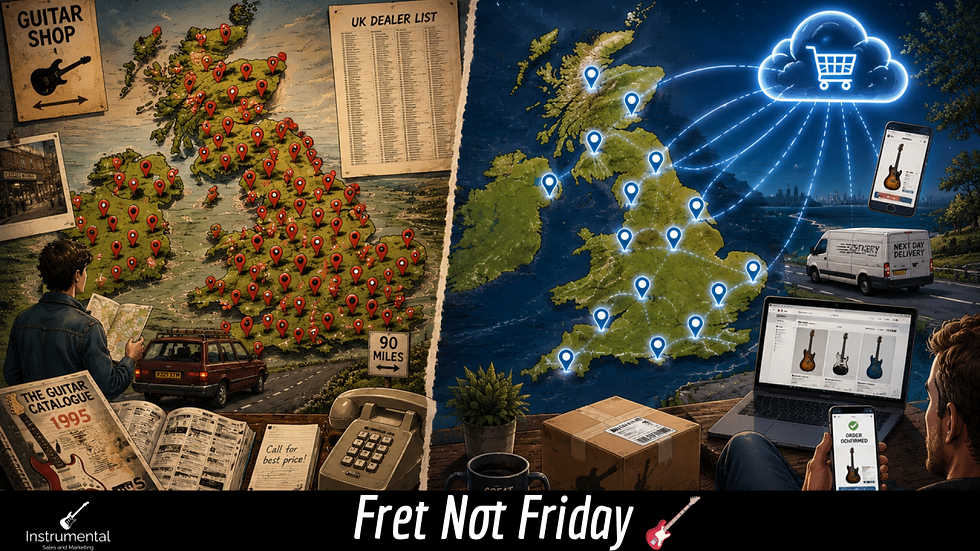
A dealer locator should be a promise, not a technicality. 📍
Where I sit on this
I distribute guitars for a living, so yes, I have obvious skin in this game. But I have watched this play out with brands that have nothing to do with mine, plenty of times, and it nearly always ends the same way. The range gets buried, then blamed.
The strongest retailers over the next few years will not be the ones with the longest brand list. They will be the ones with the clearest point of view. The ones who know what they back, why they back it, and how to actually sell it.
Half-hearted used to look like a safe middle ground. Now it just gets a discount sticker and a shrug.
Have you seen this play out? A brand quietly written off after never really being given a shot?


Comments